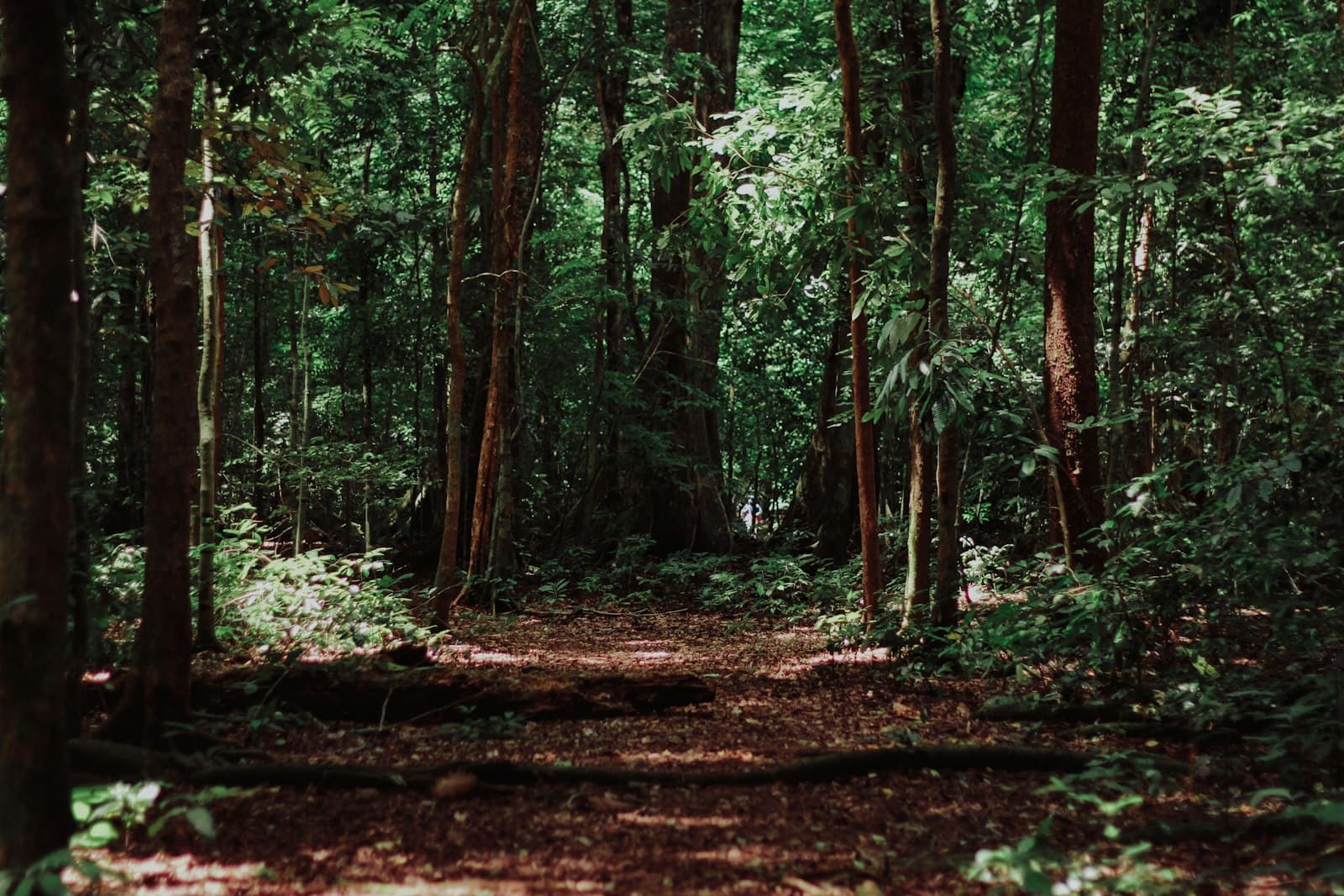
High in the cloud forest of Morne Diablotins, above the reach of roads and the noise of towns, lives a bird found nowhere else on the planet. The Sisserou Parrot — Amazona imperialis, the Imperial Amazon — is Dominica's national bird, and one of the rarest parrots alive.
Fewer than 50 individuals are believed to remain in the wild. That number alone explains why birdwatchers cross oceans for the chance of a single glimpse: a flash of deep purple-blue plumage against green canopy, a call carried on mountain wind, and then gone. The Sisserou doesn't perform for visitors. It simply exists, quietly, in a habitat so specific — old-growth rainforest above 2,000 feet, ancient gommier trees for nesting — that it cannot be found in captivity-bred numbers or reintroduced elsewhere with any confidence. Where the forest stands, the bird survives. Where the forest falls, so does the species.
The Sisserou's image sits at the center of Dominica's flag, wings spread, a green and purple crest of national identity. It is not a decorative choice. Long before conservationists arrived with binoculars and survey routes, the Kalinago people knew this bird as a symbol of the mountains themselves — proof that Waitukubuli, "tall is her body," held something the rest of the world did not.
Recovery has been slow and hard-won. Hurricane Maria in 2017 tore through much of the parrot's remaining habitat, and for a time, sightings dropped low enough to worry even the most patient researchers. But Morne Diablotins — Dominica's highest peak at 4,747 feet — held. The forest around Syndicate is among the most intact stretches of this habitat left anywhere, which is precisely why this reserve has become the prime observation ground for anyone hoping to see the Sisserou in the wild.
At Nise Syndicate Experience, this isn't a claim we make lightly. Our guided birdwatching walks move at the pace the forest asks for — slow, quiet, early. Mornings start before the heat rises, when the parrots are most active and the calls travel furthest through the trees. Alongside the Sisserou, this same trail is home to the more common but no less striking Jaco Parrot (Amazona arausiaca), giving visitors two endemic species in a single walk.